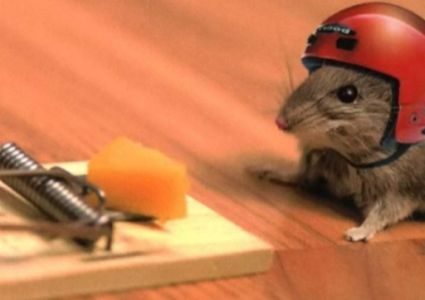
There’s a lot of stuff been written lately which says exactly what I’m thinking, except they have better wordsmiths..
The original article is here… Informational No Man’s Land
One of the remarkable features of these Covid years is the amount of misleading and downright false information emitted by “official” sources, most notably public health authorities, government-appointed regulators, and mainstream media. A part of me hankers after the times when I could trust my government and media in a time of crisis. But if I am honest with myself, I have to admit that I’d prefer to live uncomfortably in the truth than comfortably in a fantasy built for me by someone who does not have my best interests at heart.
As somone who turned on a daily basis to the website of the Centers for Disease Control and Prevention for updates on the Covid outbreak in February and March 2020, I was especially shocked and disappointed by the abysmal failure of authoritative bodies to impartially report the evidence bearing on masking, vaccinations, lockdowns, PCR testing, and other aspects of pandemic policy. My whole faith in the political, media, and scientific establishment, limited as it was, was shaken to the core.
We have been betrayed by the people charged with sharing the best available data and information with us in a time of crisis. We have been lied to and deceived about matters of life and death, such as the risk-benefit tradeoffs of the Covid vaccines, not only by the pharmaceutical industry, but by the people who occupy leading positions of public authority in our society.
Our politicians have sold us “solutions” to Covid that were far, far worse than the disease, and have generally refused to admit to their mistakes, even when they saw the comparative success of regimes like Sweden and Florida that went a very different direction.
Among the more egregious falsehoods that were either stated or implied by official authorities, and uncritically echoed by mainstream media, are the following:
- The notion that community masking was supported by strong scientific evidence. It never was (here is the latest Cochrane review of evidence for mask efficacy).
- The idea that it was critical that young and healthy people get vaccinated, if not for themselves, then for the sake of “granny and granddad.” This idea was empirically baseless, since we did not have any good evidence to show that these vaccines prevented transmission at the time these claims were made.
- The idea that toddlers and young children and teenagers with no serious health issues could benefit from receiving a Covid vaccine. There is absolutely no evidence to suggest that children’s risk from Covid is significant enough to warrant their exposure to a vaccine that has sparked a significant number of adverse events and whose long-term risks to children are still not well understood.
- The idea that sheltering in place for months on end would effectively stop a respiratory virus from spreading through the community, rather than just deferring the inevitable and inflicting enormous social and human costs in the meantime. This was a dangerous and revolutionary proposition that had no strong empirical evidence to support it.
- The idea that a person who tested positive in a PCR test, but had absolutely no clinical symptoms of Covid-related disease, should count as a Covid “case” or that the death of such a person was a “Covid” death.
I could go on, and talk about the use of a handful of cases of infant hospitalisation to push vaccines on children, the unnecessary and counterproductive closure of schools, the US government’s active role in encouraging private social media companies, behind the scenes, to censor their critics, or the infamous Hancock files, which uncover the UK’s Health Secretary Matt Hancock’s plan to “scare the pants off everyone” with his announcement of the next “variant” of Covid-19.
Thoughtful citizens who notice these betrayals now have strong grounds for distrusting “official” sources to tell them the truth, or present the facts in a non-manipulative, impartial manner. For me, and many others, the old idea that you could depend on your government to inform you of the latest science or tell you the threat level of a disease is now dead in the water.
Put simply, we now live in an informational No Man’s Land, in which every man must fend for himself, to the best of his ability, without the backing of an impressive Official Source to do his thinking for him.
We each have to scrape together whatever information we can from unofficial sources that have gotten important things right and are not defending the indefensible: coerced vaccination, vaccine-based segregation, involuntary population-wide lockdowns, etc.
It puts many of us in the peculiar position of placing more weight on the words and recommendations of individual journalists and scientists whose character and intellect we trust, than the pronouncements of national governments, official regulators, or international bodies like the World Health Organisation.
Living in an informational No Man’s Land is demanding because you can’t just skip over to the CDC website to resolve your doubts. And it is uncomfortable because you do not enjoy anything like the level of faith the average citizen has in “Science” and “Officialdom.” You are sort of at sea, and you cling to whatever bits of information and insight you can scavenge from sources that are not living off the proceeds of vaccine sales or paid by governments to launch sophisticated campaigns of psychological warfare against their own citizens.
The painful truth is that official “experts” and government ministers have played god with our lives and repeatedly given dangerous and scientifically baseless advice.
Under these circumstances, those who do their own independent research, rather than uncritically swallowing whatever “official authorities” tell them, are not the “cranks” and “conspiracy theorists” they are being made out to be, but citizens who actually understand the predicament they find themselves in, and have the courage to think for themselves, even when it draws down ridicule, censorship, and alienation from “respectable” society.
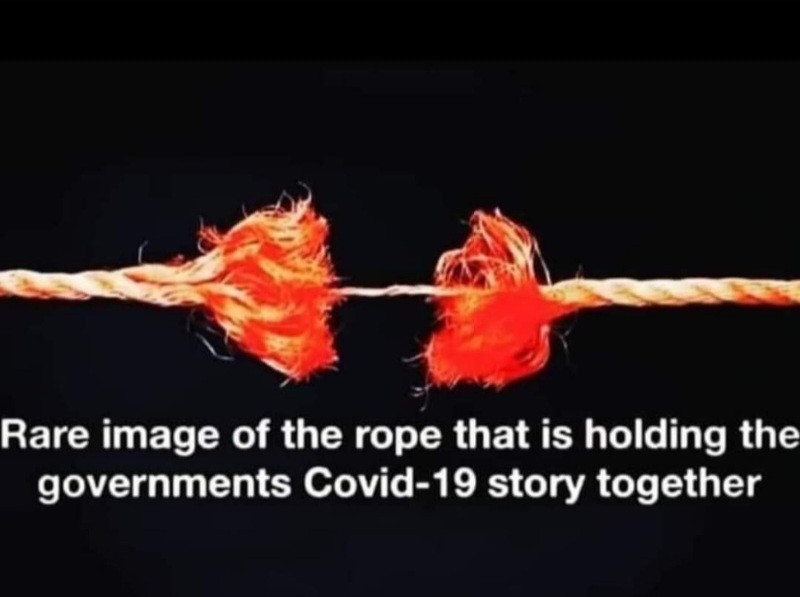



 Uncoffined
You must be logged in to post a comment.