Repost -my most popular post from 2022/2023

Covid has triggered mass psychosis, and vaccines of reason are useless

This is a shortened version of that which was shared from JuliaCaesar.blog

The virus has triggered mass psychosis, and vaccines of reason are useless – Julia Caesar

A mass psychosis prevails, triggered by the coronavirus pandemic. Why else are normal people behaving like drugged-up zombies, denying facts and failing to respond to solid information?

This phenomenon is not new. In fact, it is predictable. If a society is characterised by certain factors, a mass psychosis will most likely break out and manifest itself in predictable patterns.

These include the erasure of common sense, a blind rushing around within the elite holding power and the division of the people into diametrically opposed camps with no understanding of each other.

The four factors that are preconditions for mass psychosis are these:

  1. Many socially isolated people living in the absence of community and social ties.
  2. A large number of people experiencing a lack of meaning in their lives.
  3. Many waves of free-flowing anxiety washing over society.
  4. Widespread psychological and social dissatisfaction.

If these conditions are present, the preconditions for mass psychosis are also present. Usually, only about 30 per cent of the population will let themselves get caught up in group phenomena or mass hypnosis. Another 35-40 per cent are afraid to voice their own opinion for fear of the consequences. So for the most part, 70 per cent are silent – 30 per cent because they believe in the mainstream narrative and 40 per cent because they dare not open their mouths. That leaves an opposing segment of 20-30 per cent who do not accept the public narrative and who in certain situations protest loudly.

There is no doubt that the restrictions justified in the name of the pandemic have had a major impact on the daily way of life of many people. They have meant involuntary isolation for many, particularly people over 70 who may never have experienced such a degree of isolation before, and have harshly brought people face to face with loneliness and the nature of the self when cut off from the activities and social interactions to which they are accustomed. The second lockdown in New Zealand has hit many people hard.

It should also be pointed out that, even under normal circumstances, thousands of Kiwi’s, live more or less isolated on their farms, or in resthomes with limited access to cultural life and the chance to visit shops, restaurants or other social venues. For such people, the pandemic has meant no change. Everything is business as usual.

For these people, it can be difficult to understand what is traumatic about not going to a rugby match or a restaurant, because they never do such things normally. What is clear, however, is that the pandemic has brought many people face to face with loneliness and constraints on socialising, which has brought on a sense of crisis.

Above all, the scaremongering of the media, authorities and politicians has left people frightened out of their wits, and terrified people do not think rationally. In a short time, the firm conviction spread that you either accept the experimental jabs, without you or the administering nurse knowing what is in them, or you die from Covid-19.

In other words, pure lies and scaremongering, designed to shepherd people into health centres for injection with substances not approved for use in humans except for authorised emergency use (EUA) by the US Food and Drug Administration (FDA). Those who take the jabs believe it is ”safe and effectively”. But not even the manufacturers know how the so called ”vaccine” works.

Free-floating anxiety (anxiety without a specific cause) is the most painful psychological condition there is. The pain is extreme. It leads to panic attacks and other distressing psychological conditions as sufferers search for an explanation for their anxiety. And now the media is offering a narrative – the coronavirus pandemic – that includes both a cause and a strategy to deal with it. People are incentivised to follow the strategy, no matter how high the price. That’s what happens when a mass movement begins.

Later, in another stage, people engage in a heroic collective struggle with the object of their anxiety. Then a new kind of social bond and a new sense that life has meaning emerges. Suddenly, all of life is about fighting the anxiety trigger, a process which creates a new community with other people. Suddenly you are part of a social communion. The transformation leads to a kind of psychological intoxication.

Comparable to hypnosis, this is what creates a mass movement. Many experts, such as the French physicist Gustave Le Bon (1841-1931), have described this phenomenon as a kind of hypnosis.

What happens at the moment when people succumb to psychological intoxication and are seized by a mass movement is that facts no longer matter. Whether the narrative is right or wrong becomes irrelevant, even if it is blatantly wrong. What matters is that psychological intoxication occurs. A cult mentality takes hold.

It is what keeps them going, even if they happen to be struck at some moment by the realisation that they are wrong. It is the pivotal mechanism of a mass movement, and it is what makes it so difficult to influence.

For the people inside the movement, it doesn’t matter if the narrative is wrong. They just want to avoid going back to the painful experience of free-floating anxiety, whatever it takes.

The first thing we have to do if we want to change this is to acknowledge this painful anxiety. Think about why we ended up with this feeling of meaninglessness, this lack of social ties, and this massive psychological dissatisfaction, and try to tell people that we don’t need this coronavirus crisis to create new social ties. We need to look for other ways of dealing with social problems that existed before the crisis, and find other solutions.

The media play a crucial role in the emergence and perpetuation of a mass movement. Without their involvement, it is not possible to create mass psychosis on the scale that we are seeing now, which has almost no precedent in history. This mass psychosis is global.

Journalists have dropped all previous restraints and are engaging in pure propaganda. No one who does not represent the mainstream narrative is allowed to speak. There is no questioning or debate. The online platforms are the tools of the globalists and practice harsh censorship.

This erodes the economy, it destroys social trust, it deprives you of a sense of belonging and security. It creates feelings of powerlessness, despair and resignation, creates a sense of homelessness in your own country when the urban landscape is completely transformed – in short, the four factors that are listed above.

When people feel that they cannot influence anything, that they are being ridden roughshod over again and again, a psychological and social dissatisfaction, a feeling of meaninglessness and apathy spreads, on top of which comes free-floating anxiety dulled with drugs. It can be summed up in one word: resignation.

It does not matter what you vote for; none of the parties care about the best interests of the citizens.

In a state of resignation and despair, mass psychosis offers a ”solution,” a way out of the piercing anguish. Psychological intoxication shrinks the field of vision and makes people see only what is dictated by the narrative. They suffer tunnel vision that shuts out of view, for example, all insights into the damage and casualties that lockdowns, school closures and travel bans have caused in much of the world. Those who have allowed themselves to be swept up by mass psychosis feel no empathy for the victims of lockdowns or other totalitarian restrictions. They continue to believe that the measures are effective, despite the evidence that they are ineffective. Those who subscribe to the public narrative exult over vaccine passes and fail to see what a huge restriction they are on our freedom.

A mass psychosis monopolises your attention so powerfully that you can take everything away from people, and they won’t even notice. That’s exactly what’s going on right now. People are being deprived of their freedom, and few are protesting, because they don’t see what’s happening.

Another consequence is that people caught up in mass psychosis show deep intolerance for dissenting voices. If someone suggests that the public narrative is false, this threatens to trigger awareness, and those caught up in the mass psychosis become angry at being cast back into their original anxiety and discontent. So they direct deep aggression at voices that express dissenting views. At the same time, they are extremely tolerant of people who repeat the prevailing mainstream narrative.

More than 80 per cent of the people have invested their faith in the vaccine shots and must then do all they can to shut out voices that confirm the mistake.

Anyone who has tried to have a factual discussion with vaccination advocates on social media can attest that it is impossible. Some of those who have invested their faith and bodily health in the shots may sense that they have made a rash decision and must then do all they can to shut out voices that confirm the mistake. Hence the startling aggressiveness.

Science in general is in crisis, one of the reasons being that almost all research is funded by people and organisations that should have been avoided as sponsors. It is well known that the unscrupulous pharmaceutical industry does not hesitate to bribe the medical profession and the pharmaceutical authorities, and they do not hesitate to accept the bribes either. But the general public does not know about this and therefore blindly trusts the doctors.

If a mass movement really balloons in a society, it is difficult to alert the masses. Usually, it is impossible. The masses don’t wake up until the destruction has gone very deep and is perhaps irreparable.

But if those who disagree with the mass narrative continue to speak out, they can prevent the masses from committing the most egregious crimes. That is very important. You – that’s right, you! – can make their hypnosis less profound by continuing to speak. We should also speak for those who are not in the streets, those who are in their offices, those who are afraid of losing their jobs if they say they feel something is wrong. We must try to help them become stronger.

We also need, paradoxically, to speak for those who believe in the mainstream narrative and are trapped in the mass psychosis. We should speak both for the masses and for those who refuse to run with the herd.

What may surprise the observer of mass psychosis is that highly educated people, those with access to the microphones, often spearhead the disinformation. They are generally more susceptible to manipulation than ”ordinary people” with less education: car mechanics, excavator operators, shop assistants, plumbers, hairdressers, taxi drivers and others who often have greater access to common sense. The differences are due to education. The highly educated have learned to obey. They have learned to think like everyone else.

The tide will turn, sooner or later. But first we have to be sufficiently concrete in the way we look at people in the world, and there are of course many factors at play here. Totalitarianism and mass movements have one main characteristic: they are always self-destructive. They are only good for destruction, never for construction. And since mainstream ideology is now literally working its way into our very bodies, dramatic mistakes can result.

By using our voices in the alternative media, we can keep a portion of the population, the 40 per cent, vigilant until the facts are so clear, the damage the system has done is so clear, that they too can see it. Then they will be more and more motivated to speak out – loudly. That’s when we reach the tipping point.

Those who are completely hypnotized will never see the damage. They are literally blind.
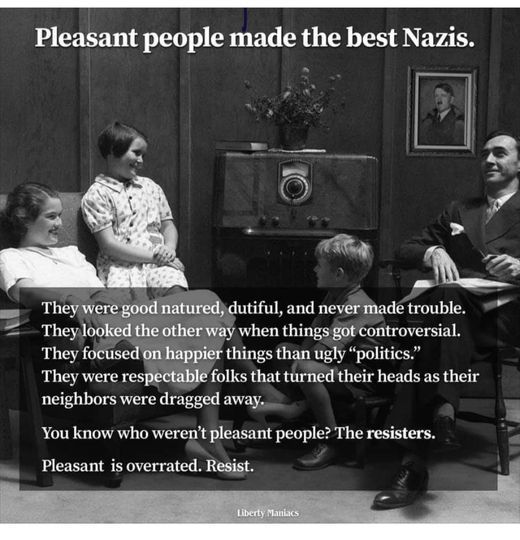
Totalitarianism -it’s causes, and how to counter it.

Mattias Desmet gave an important speech at the recent Fourth International Covid/Crisis Summit, held last month in Bucharest Romania.

He specialises in the study of mass hysteria and totalitarianism and has recently published a book – the-psychology-of-totalitarianism


His strategies and philosophies were commonly found throughout the anti-mandate protest groups in NZ at least, in particular the philosophy of non violence, and continued resistance.

His prepared transcript is below (it differs slightly)

Dear members of the Romanian parliament,

Dear audience,

Dear ladies and gentlemen,

As some of you might know, I wrote a book, titled The Psychology of Totalitarianism. It is about a new kind of totalitarianism that is emerging now, a totalitarianism which is not so much a communist or fascist totalitarianism, but a technocratic totalitarianism.

I have articulated my theory on totalitarianism on so many occasions. I will only present the gist of it here and move on to a problem which is particularly relevant for an address in a political institution such as this parliament: the perversion of political discourse in the Enlightenment tradition.

Here is in a nutshell what I articulated on totalitarianism throughout the last years: totalitarianism is not a coincidence. It is a logical consequence of our materialist-rationalist view on man and the world. When this view on man and the world became dominant, as a spontaneous consequence, a new elite ánd a new population emerged. A new elite that excessively used propaganda as a means to control and steer the population; and a population which lapsed more and more into loneliness and disconnectedness, both from its social and its natural environment.

These two evolutions, the emergence of an elite that uses propaganda and a lonely population, reinforced each other. The lonely state is exactly the state in which a population is vulnerable for propaganda. In this way, a new kind of masses or crowds emerged throughout the last two centuries: the so-called lonely masses.

People fall prey to mass formation to escape a pervasive feeling of loneliness and disconnectedness, induced by the rationalization of the world and the ensuing industrialization of the world and the excessive use of technology. They merge together in fanatic mass behavior because this seems to free them from their lonely, atomized state.

And that is exactly the big illusion of mass formation: belonging to a mass doesn’t liberate a human being from its lonely state. Not at all. A mass is a group that is formed, not because individuals connect to each other, but because each individual separately is connected to a collective ideal. The longer a mass formation exists, the more solidarity they feel for the collective and the less solidarity and love they feel for other individuals.

That’s exactly why in the end stage of mass formation and totalitarianism, every individual reports every other individual to the collective, or to the state, if they think that other individual is not loyal enough to the state. And in the end, the unthinkable happens, with mothers reporting their children to the state and children their parents.

The lonely masses distinguish themselves in several respects from the physical masses of earlier times: they can be much better controlled, they are less unpredictable than physical masses, and they last longer, in particular if they are constantly fed by propaganda through mass media. The creation of long-lasting lonely masses through propaganda was the psychological basis for the emergence of the large totalitarian systems of the 20th century. Only if a mass formation exists for decades can it be made the basis of a state system.

The emergence of lonely masses led to Stalinism and Nazism in the beginning of the 20th century and now it might lead to technocratic totalitarianism. I described the psychological processes involved in the emergence of lonely masses on many occasions, and I won’t repeat it here.

Today, here, in the Romanian parliament, a political institution, I address politicians. I want to tell you that politicians have a particular responsibility in these times of emerging totalitarianism. Totalitarianism, as Hannah Arendt said, is a diabolic pact between the masses and the political elites. Political elites need to contemplate –scrutinize the ethical qualities of their speech. There is something wrong with political discourse. This is what I intend to say: political discourse is perverted.

For instance, we got used to the fact that politicians, once they are elected, never do what they promised to do in their election speeches. How far are we removed from political virtue as described by Aristotle. For Aristotle, the core of political virtue was the courage to speak the Truth, or, to use the Greek term, Parrhesia, bold speech, in which someone says exactly this what society doesn’t want to hear, but which is necessary to keep it psychologically healthy.

I am not so much accusing individual politicians here; I am addressing political culture in general. And even more, I am talking about a perversion that is inherent to the entire tradition of Enlightenment. Our society is in the grip of a specific type of lying, a kind of lying that is historically speaking relatively new, that emerged for the first time after the French Revolution, when the religious view on man and the world was replaced by our current, rationalist-materialist worldview. What am I talking about when I refer to this ‘new kind of lie?’ I am talking about the phenomenon of ‘propaganda.’

Propaganda is everywhere around us. Public space is saturated with it. Recent years have illustrated that abundantly, during the coronacrisis, during the Ukraine crisis, and now, even more clearly, during the coverage of the Israel-Palestine conflict on both mainstream and social media.

It is not that I do not understand the motivation of those who choose for propaganda. They often start from good intentions. Or at least: somewhere, they do believe in their good intentions. Read the work of the founding fathers of propaganda, such as Lippman, Trotter, and Bernays. They believe that the only way for the leaders to keep control in society and to prevent society of lapsing into chaos is propaganda.

The leaders cannot overtly impose their will anymore to the population. Nobody would accept that within a materialist-rationalist society. Hence, the only way to make the population do what the leaders want, is to make them do what the leaders want without them knowing that they do what the leaders want. In others words: the only way to control the population is through manipulation.

The people in favor of propaganda will argue that we can never tackle the challenges of climate change and viral outbreaks through democratic means. They will ask: ‘Do you think people will voluntarily give up their cars and flying holidays? To escape disaster, we need technocracy, a society led by technical experts, and to install technocracy, we need to mislead the population, we need to manipulate them into technocracy.’

First of all, I want to tell you that I don’t believe technocracy is a solution to the problem. But that’s not what matters most. Let me tell you something: to try to create a good society for the human being through manipulation, is a contradictio in terminis. The essence and core of a good society is exactly the ethical quality of public discourse. Man, in the end, essentially is an ethical being, and to pervert man’s speech is to pervert man itself; to pervert political speech is to pervert society itself.

To give up sincerity in order to create a good society is to try to build a good society by giving up immediately, from the beginning, the essence of a good society (!). Truthful speech is not a means towards an end, it is the end in itself; sincere speech is what makes us human and humane.

This is crucial to understand: propaganda is not a historical coincidence, it is a structural consequence of rationalism. If you consider the psychological structure of our current society, it’s fair to say that propaganda is the major guiding principle. In a remarkable way, the pursuit of rationality during the tradition of Enlightenment didn’t lead to more Truthful speech, as the founding fathers of this tradition believed. Science would replace questionable religious and other myths; society would finally be organized according to reliable information instead of subjective conjectures. Now, a few centuries later, this turned out to be an illusion. There has never been as much unreliable information as now in public space.

The materialist-rationalist view on man and the world, in a strange way, rather led to the opposite of what it expected. As soon as we started to conceive the human being as a mechanistic, biological entity, for whom the highest attainable goal was survival, it became rather unfashionable to try to speak the Truth. Speaking the Truth, the Ancient Greeks knew that very well, doesn’t maximize your chances on survival. The Truth is always risky. ‘No one is hated more than he who speaks the Truth,’ Plato said. Hence, within a materialist-rationalist tradition, speaking the Truth is something stupid to do. Only idiots do it. That’s how the fanatic pursuit of rationality led us astray, straight into the dark wood of Dante, ‘where the right road is wholly lost and gone.’

This materialist-rationalist view on man and the world – why do we actually cling to it? It loves to present itself as the scientific view on man and the world. Let me tell you that this is nonsense. All seminal scientists concluded exactly the opposite: in the end, the essence of life always escapes rationality, it transcends the categories of rational thinking. To name only one major scientist: in the preface of a book of Max Planck, Einstein claimed that it is a mistake to believe that science originates from supreme logical-rational thinking; it originates from what he called a capacity for ‘einfühlung’ in the object one investigates, which means as much as ‘a capacity to empathically resonate with the object you are investigating.’

Rationality is a good thing and we need to walk the path of rationality as far as possible, but it is not the end goal. Rational knowledge is not a goal in itself; it is a stairway to a kind of knowledge that transcends rationality, a resonating knowledge, the kind of supreme intuition the martial arts of the Samurai culture aimed for throughout their technical training. It is at that level that we can situate the phenomenon of Truth.

This brings us closer to an answer to the question: what is the remedy to the disease of totalitarianism? Can we do something about totalitarianism? My answer is simple and straight: yes. The powerless do have power.

Propaganda-induced mass formation is a fake, symptomatic solution for loneliness. And the real solution lies in the Art of Sincere Speech. My next book, which I am writing now, is all about the psychology of Truth. Truth, by definition, from a psychological point of view, is resonating speech, it is speech which connects people, from core to core, from soul to soul, speech that penetrates through the veil of appearances, through the ideal images we hide behind, the imaginary shells we seek refuge in, and reconnects the shivering and disconnected soul of one human being to that of another human being.

Here we observe something crucial: sincere speech is the real cure for loneliness – it reconnects people. As such, it takes away the root cause of the major symptom of our rationalist culture – mass formation and totalitarianism. And at the same time, sincere speech also inhibits this symptom in a more straightforward way. It is well known that, if there are some people who continue to speak in a sincere way when mass formation is emerging, the masses do not go to the ultimate stage where they start to think it is their duty to destroy each and everyone who doesn’t follow the totalitarian ideology. 

At every moment we chose to speak out in a sincere way, no matter where this happens, in a newspaper or a television interview, but equally well in the presence of only one other person at the kitchen table or in the supermarket, we help to cure society from the disease of totalitarianism.

You have to take this literally. Society, as a psychological system, is a complex dynamical system. And complex dynamical systems have the fascinating characteristic of so-called sensitivity to initial conditions. To put it simple: the smallest changes in one minor detail of the system affect the entire system. For instance, the smallest change in the vibration pattern of one water molecule in a boiling pot of water changes the entire convection pattern of the boiling water.

Nobody is powerless. And hence, every single one of us is responsible. Each and everyone who speaks a sincere word and succeeds in truly connecting as a human being to another human being, in particular a human being with a different opinion, deserves to be mentioned in the books of history, much more than a president or a minister who engages in propaganda and fails to show the courage to speak sincerely.

The more I study the effects of speech on the human being and on humans living together, the more hopeful I become and the more I see that we will overcome totalitarianism.

We shouldn’t be naïve when we talk about the Truth. Endless are the atrocities in history committed by people who believed they possessed the Truth. Truth is an elusive phenomenon; we can enjoy its presence from time to time, but we can never claim it or possess it.

Sincere speech is an art. An art we have to learn step by step. An art we can progressively master. That’s exactly why I started workshops on the Art of Speech – workshops in which we practice that art in the same perseverant, disciplined way as any other art is practiced.

Practicing this art implies that we overcome our own fanatic convictions, and even more, our own narcissism and ego. Truth speech is this kind of speech which penetrates through what I call ‘the veil of appearances.’ To practice it, you have to be willing to sacrifice your ideal image; your public reputation. That is exactly what the Parrhesia in Ancient Greek culture meant: speaking out, even if you know that those who find their stronghold in the world of appearances will target you.

Truth-telling can make you lose something. That is for sure. But it also gives you something. To be more psychologically precise: Truth speech makes you lose something at the level of the Ego and win something at the level of the soul. I am quite fascinated by the way in which sincere speech leads to psychological strength.

I think Mahatma Gandhi provides us with a splendid historical example. A few years ago, I started to read his autobiography. I did so at the moment I started to realize that the only efficient resistance against totalitarianism is non-violent resistance. Of course this only applies to internal resistance, resistance from within the totalitarian system. External enemies can destroy totalitarian systems from without. That’s for sure.

But internal resistance, as I mentioned, can only be successful if it is non-violent in nature. All violent resistance will rather speed up the process of totalitarization, just because it is always used by the totalitarian leaders to create support in the masses to destroy each and everyone who goes against the system. Once I realized that, I became interested in what Gandhi had to say in his autobiography.

I was happily surprised to see the title: Experiments on Truth. And from the first pages, I learned that for Gandhi, the core and essence of non-violent resistance is sincere speech. His entire life, Gandhi tried to improve the sincerity of his speech. He did so in a simple, almost childish and naïve way, wondering every evening how sincere he had spoken that day, where he had lied or when he could have spoken more accurately or sincerely.

And here is something important: in the beginning of his biography, Gandhi mentions something magnificent. He says: I actually had no major talents. I was not handsome as a man, I didn’t have much physical strength, I was not intelligent at school, I was not a good writer, and I was not talented as a speaker. But he had this passion for sincerity and Truth. And this man, devoid of any major talents, but with a passion for sincere speech, this man did something even the strongest army in the world couldn’t do: he kicked out the English of India.

The better you start to see the almost endless horizon of possibilities offered by speech, the more you realize: it is words that rule the world. The human being can use words in a manipulative way, as pure rhetoric, indoctrination, propaganda, or brain-washing trying to convince the Other of something it doesn’t believe in itself. Or it can use words in a sincere way, trying to convey something to a fellow human being it feels inside itself. That is the most fundamental and existential choice human beings face: to use words in one or the other way.

Dear politicians of Romania and abroad, this is what I want to tell you today: it’s time for a metaphysical revolution. And you are ought to play a major role in it. The series of crises our society goes through are nothing else than a metaphysical revolution, which, essentially, boils down to this: the switch from a society that functions according to the propaganda principle to a society that is oriented towards Truth.

We need a new political culture, a culture that re-appreciates the value of Truth Telling. We need a new political discourse, a political discourse that leaves the shallow, hollow rhetorics, and propaganda behind and speaks from the soul, from the heart; we need politicians to become true leaders again, leaders who lead rather than mislead the population.