Covid explained from the unvaxxed point of view.

Fantastic comment on a substack:

“A lot of people are getting upset having their conduct during covid compared to Germans supporting the rise of Nazism.

Let’s recapitulate.

A fifth of the population was legally classified as unclean. They were barred from most public spaces, including theatres, restaurants, movies, pubs, clubs, swimming pools, sporting events, concerts, conventions, etc.

To access public facilities, people had to carry a digital mark with them so authorities could confirm they weren’t unclean.

The unclean were fired and barred from most jobs: education, healthcare, courts  – all public sector work, most major union jobs and a wide smattering of major private employers. When they were fired, the unclean were denied employment insurance, the reasoning being that they had been fired for cause on account of being unclean.

The unclean were banned from travel on trains, planes, and chartered boats. They had no legal means of leaving the country. Even if they wanted to, they could not escape the country that obviously hated them so.

It became illegal to socialize with the unclean.  They weren’t allowed to attend weddings or funerals, or visit sick relatives or friends in hospital.

Special laws were made for the unclean subjecting them to house arrest if they were around a person who had recently had a positive PCR test. The unclean had to continue to cover their faces in public when universal masking was dropped.

It became socially acceptable to wish death upon the unclean in social media and in major news organizations. Public health figures and other politicians gave press conferences to shame and insult the unclean. The public developed shared pejorative names for them, and relished in insulting the unclean.

News media regularly ran polls asking if the unclean should be arrested or fined. Public figures openly and proudly spoke about witholding medically necessary healthcare from the unclean – letting them die. The unclean were removed from organ transplant lists, condemned to almost certain death.

No end date for these measures was ever suggested, no timeline given. To the contrary, this was called the “new normal”.

Criticizing any of these developments made you a social pariah, and likely cost you most of your friendships and family relations, if not your job.

The lesson of the Holocaust – and of covid – isn’t that Germans or Albertans or people of the 21st Century are uniquely gullible or evil. It’s that for most people, “morality” is not a matter of principle, but rather of adopting what they perceive to be the dominant group ideology – even if that ideology is marked by wanton irrationality or brutal inhumanity.

Indeed, as in certain cults or gangs, the brutality or irrationality of the acts or beliefs required to signal group inclusion further entrench people into the ideology, rather than repel them; a kind of perverse sunk cost fallacy writ large.

So, yes, if you’re a typical person – Albertan, Canadian or otherwise – it is overwhelmingly likely that you would have been a Nazi if you were born in Nazi Germany. If you cheered along lockdowns and mandates, that likelihood approaches certainty.

Repent.

On been ‘cancelled’

If you haven’t been “cancelled” yet… what exactly are you waiting for?

Or maybe the better question is: What are you still afraid of?

Before I explain where I’m going with this, allow me to offer a metaphor. A story that speaks to the choice we all must eventually face:

In the depths of a medieval dungeon, three prisoners are shackled to a stone wall, awaiting execution.

One by one, each man is summoned by the executioner and given three choices:

Firing squad.
Hanging.
The Black Door.

The Black Door is a mystery cloaked in terror. Whispers among the prisoners speak of torture, madness, and horrors worse than death.

The executioner approaches the first prisoner.

“How do you wish to die?”

“Hanging,” the man replies without hesitation.

The executioner leads him away.

He returns for the second prisoner.

“How do you wish to die?”

The man stiffens. “Firing squad.”

Moments later, the thunder of rifles echoes through the dungeon halls.

Finally, the executioner faces the third prisoner.

“How do you wish to die?”

The man’s eyes dart to The Black Door. He hesitates. For a moment, he seems ready to choose it. But fear overtakes him.

“H-hang me,” he stammers.

The executioner escorts him to the gallows. As the noose is secured around his neck, the executioner asks,

“Any last requests?”

The prisoner gulps. “Yes… before I die, tell me—what’s behind The Black Door?”

The executioner pauses, then smiles.

“Freedom.”

And with that, he pulls the lever.

Moral of the story:

Often, the path we’re warned not to take… is the very one that leads to freedom.

Cancel culture is The Black Door. Most people tremble before it. But everyone I know who’s had the courage to walk through it, has emerged more free than they’ve ever been.

Over the past five years, I’ve asked every dissenting doctor, scientist, and whistleblower the same question at the end of our interviews: “Do you have any regrets for speaking out?”

Without hesitation, they all answered, “No.”

In fact, the majority described what felt like a spiritual phenomenon:
For the first time in their lives, they were experiencing the kind of freedom that comes only from being in service to truth.

I can relate.

The moment I stopped playing it safe was the moment I was consumed by a peace I’d never known.

It was Jesus Christ who said, “You shall know the truth, and the truth shall make you free.”

That’s not just theology.
It’s a roadmap to liberation.

So I ask you again:
What are you still afraid of?

Losing your job?
Losing customers?
Losing friends?

Here’s what I’ve learned from being willing to lose any of that:

That’s when fate reveals itself.

When you’re truly in service to people, to truth, to life itself—something sacred happens.

The benevolent forces of the universe step in.
That’s the safe way of saying: God shows up when you show up.

Bad jobs are replaced with good jobs.

Misaligned customers are replaced with aligned customers.

Shallow friends are replaced by deep friends.

This is what happens when you choose truth over comfort.

This is what happens beyond The Black Door.

Yes—getting canceled is uncomfortable. But only for a moment.

Stay the course, and the discomfort will pass.

In its place will come the quiet power of knowing you’re in service to something far greater than yourself.

Because the only life worth living is a life lived on purpose.

Are you ready?

Of course you are.

You were born ready.

The time is now.

The world needs your voice.

Your wisdom.

Your uncensored truth.

Now more than ever.

Be brave. Get out there and…

#GetCanceled

PASS IT ON!

Mikki Willis
Father/Filmmaker

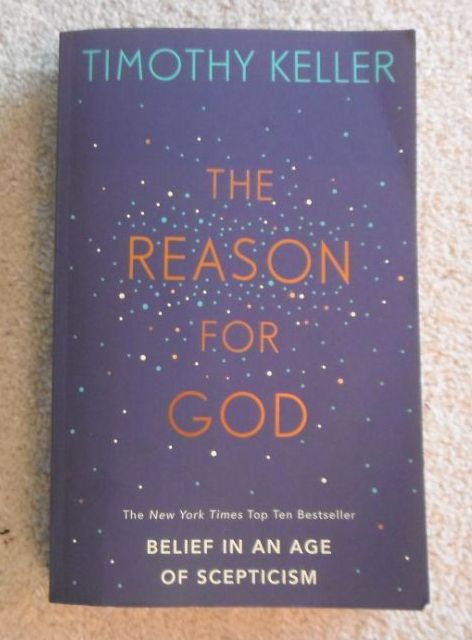
Book review -The Reason for God

The Reason for God. Belief in an age of scepticism
By Timothy Keller

This book was given to us from some rather well meaning        religous friends

Religion is a very personal emotionally charged subject for some, so I’m well aware of possibly offending someone, somewhere.

Been a live at let live sort of person, I have no strong beliefs about religion -simply put, if it works for you, so be it.

The book itself has a series of common questions that come up about beliefs in God, as noted by the author who is the head of a popular Christian church in the USA.

The book starts off lightly and helpfully corrects some misconceptions about religion that I’ve held for years

  • If you believe in God, you are doing this as an act of faith, because you cant prove God exists. If you don’t believe in God, you are also doing this as an act of faith, because you cannot prove God doesn’t exist.
  • Those annoying, fanatical, overbearing, self-rightous religious people, you run into occassionally, aren’t ‘super religious’ at all. They haven’t learned to be humble, sensitive, empathetic, and forgiving as christ was, and therefore aren’t religous enough. (P57)
  • Religious people aren’t perfect, churches are like help centres for those finding their way, rather than for people who are already there. Expecting  ‘perfect’ christians at a church is a bit like expecting only healthy people at a hospital.

The book gets deeper and deeper after that and starts to lose me because I’m not that clued up on the bible.

For example, It mentions ‘The Da Vinci code’ which while it’s fictional, it has started a flood of bible revisionism.
I’m not up with the play on that topic, and I don’t think I need to be.

To sum it up another way, I don’t need to be a qualified chef to fry an egg, I can do it just fine thank you very much.

It’s probably therefore a book that I need to read from cover to cover several times to ‘get’ it, but I probably need to read the bible first.

It’s like the book tries to pull you into a certain way of looking at things, and you are either on that bus, or not.

Overall it feels like the book nudges you to think about God in a certain way, and ‘join the club’, I dont think it sets out to do this intentionally, but thats where I ended up.

Perhaps my attitude will change as I read the book a few more times, but thats how it feels to me at the moment