
Back when I was a lad, everyone knew what a woman was. (whats changed?)
The concept of money
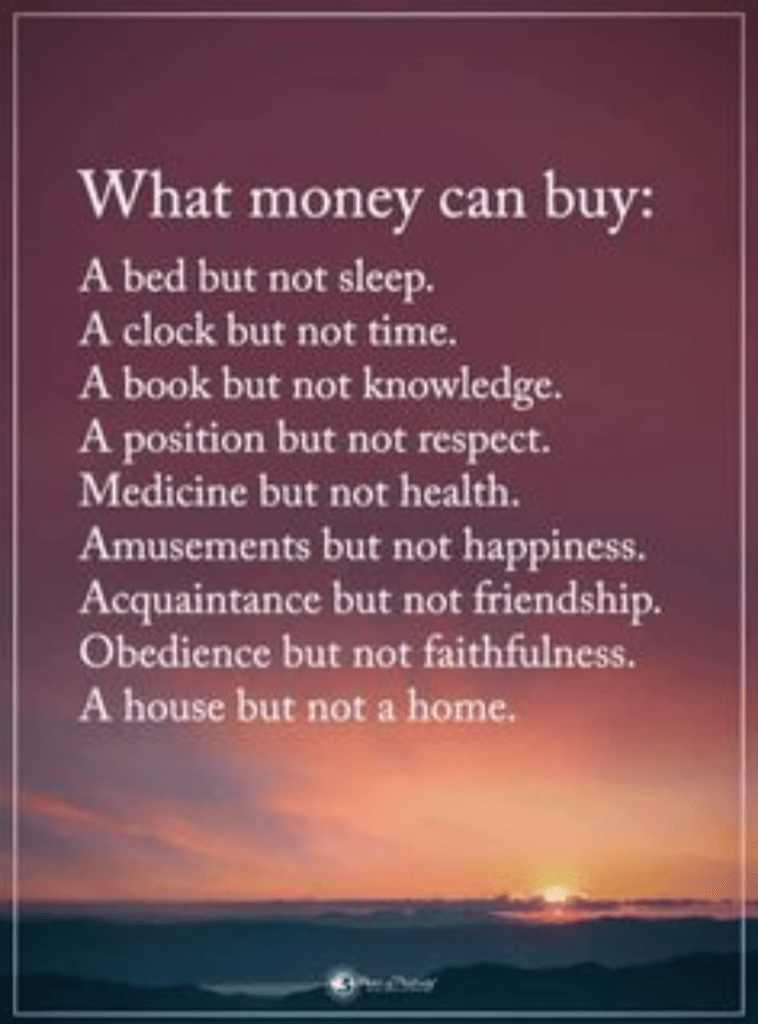
So you think that money is the root of all evil? . . . Have you ever asked what is the root of money? Money is a tool of exchange, which can’t exist unless there are goods produced and men able to produce them. Money is the material shape of the principle that men who wish to deal with one another must deal by trade and give value for value. Money is not the tool of the moochers, who claim your product by tears, or of the looters, who take it from you by force. Money is made possible only by the men who produce. Is this what you consider evil?
When you accept money in payment for your effort, you do so only on the conviction that you will exchange it for the product of the effort of others. It is not the moochers or the looters who give value to money. Not an ocean of tears nor all the guns in the world can transform those pieces of paper in your wallet into the bread you will need to survive tomorrow. Those pieces of paper, which should have been gold, are a token of honor—your claim upon the energy of the men who produce. Your wallet is your statement of hope that somewhere in the world around you there are men who will not default on that moral principle which is the root of money. Is this what you consider evil?
Have you ever looked for the root of production? Take a look at an electric generator and dare tell yourself that it was created by the muscular effort of unthinking brutes. Try to grow a seed of wheat without the knowledge left to you by men who had to discover it for the first time. Try to obtain your food by means of nothing but physical motions—and you’ll learn that man’s mind is the root of all the goods produced and of all the wealth that has ever existed on earth.
But you say that money is made by the strong at the expense of the weak? What strength do you mean? It is not the strength of guns or muscles. Wealth is the product of man’s capacity to think. Then is money made by the man who invents a motor at the expense of those who did not invent it? Is money made by the intelligent at the expense of the fools? By the able at the expense of the incompetent? By the ambitious at the expense of the lazy? Money is made—before it can be looted or mooched—made by the effort of every honest man, each to the extent of his ability. An honest man is one who knows that he can’t consume more than he has produced.
Money rests on the axiom that every man is the owner of his mind and his effort. Money allows no power to prescribe the value of your effort except the voluntary choice of the man who is willing to trade you his effort in return. Money permits you to obtain for your goods and your labor that which they are worth to the men who buy them, but no more. Money permits no deals except those to mutual benefit by the unforced judgment of the traders.
So long as men live together on earth and need means to deal with one another—their only substitute, if they abandon money, is the muzzle of a gun.
Excerpted from Atlas Shrugged by Ayn Rand
Ayn Rand ( 1905 – 1982) was a Russian born American writer whose commercially successful novels promoted individualism and laissez-faire capitalism. Along with Rose Wilder Lane and Isabel Patterson, she is one of three founding mothers of American libertarianism.
Groundswell announces a supermarket boycott
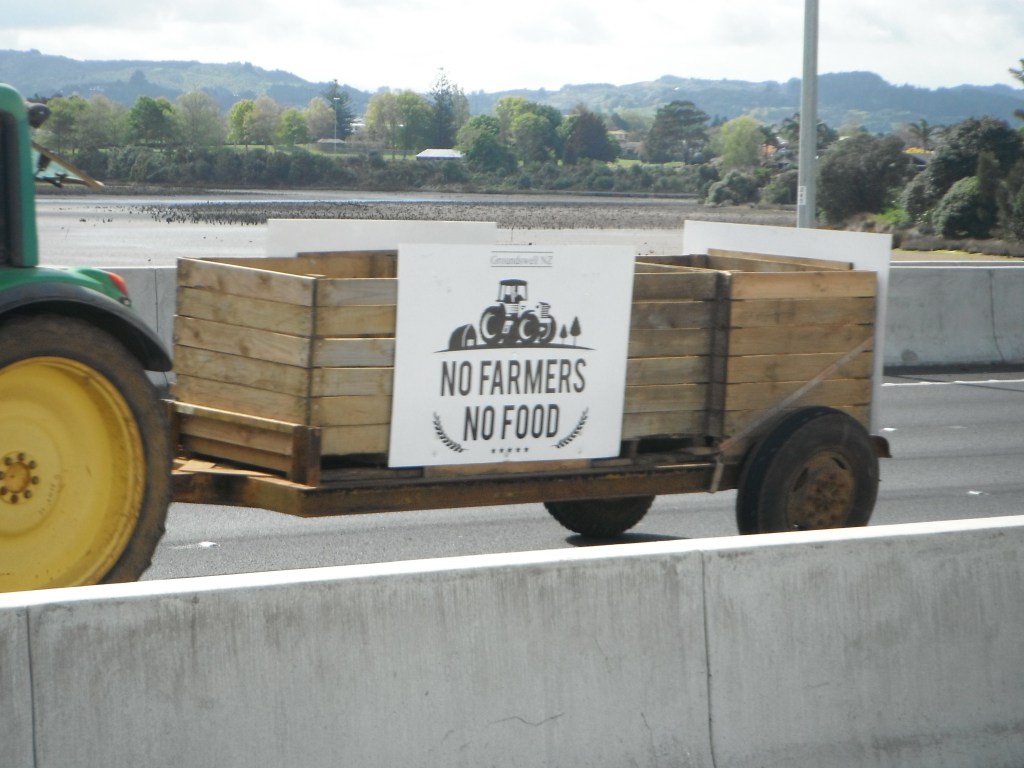
Press Release: Boycott Countdown – Supermarket heavyweight punches down on Kiwi farmers
This week, the Head of Sustainability for supermarket giant Countdown was published in the media discussing the company’s desire to reduce its carbon footprint.
“Companies should be assessing their impacts on our environment. However, instead of looking at how they, an Australian-owned multinational with 194 stores New Zealand-wide, can reduce their emissions, they have decided to blame farmers,” Groundswell NZ co-founder Bryce McKenzie says.
“It is, unfortunately, a narrative New Zealand’s food producers are all too familiar with. Accustomed to being the Government’s environment scapegoat, farmers and rural communities are hardly surprised to see big corporate players dancing to the same tune.
“Groundswell NZ are very sceptical of Countdown’s claim that most of their emissions are the fault of local suppliers. This is a massive chain operation that utilises refrigerants, has massive distribution networks requiring a great deal of fuel, and substantial energy costs to run nearly 200 stores. They also import huge amounts of products from overseas, relying on air and sea travel. They cannot expect us to believe that they are practically carbon neutral except for emissions that farmers are responsible for.
“Countdown also uses GWP100 to calculate emissions which is an outdated and less accurate way to measure methane emissions. The Intergovernmental Panel on Climate Change (IPCC) have reported that using the GWP100 method overestimates methane’s warming potential by 3-4 times. They advocate for the use of the updated GWP* metric and for accounting correctly for carbon sequestered on farms through trees, bush, crops, grass, and soil.
“We call BS on Countdown’s buck passing and suggest they substantiate their claims. Following that they might like to reflect on why they had to push out their own zero-waste-to-landfill target from 2020 to 2025 while spending $400million on a rebrand.
“New Zealand’s farmers are among the most efficient in the world. We pride ourselves on our sustainable practices and the care we take of our environment. It is fair to say that as a community we are sick to death of being the scapegoats of governments and big corporations who don’t want to take responsibility for their own environmental impacts.
“So we have decided to take action. From Monday 24th July to Sunday 7th August, Groundswell NZ will be calling on our supporters to join us in boycotting Countdown. We, the food producers of New Zealand, have had enough.”
Living in nervous New Zealand
While the rest of the world has moved on, NZ is a nervous place in these ‘post’ covid times. Motorways and bridges are closed at the slightist hint of possible danger, least something ‘might’ happen. They recently closed the harbour bridge in Auckland because of high winds.
Then they cancelled the trains, once everyone got to work. (good luck trying to get home again)
https://www.1news.co.nz/2023/05/05/auckland-train-cancellations-caused-by-humidity-weather-kiwirail/
Yeah……., I remember riding a bike (pictured below) across the harbour bridge to work in a gail in the late 1980’s and having it try to change lanes because of the wind. I also remember having a back tyre that used to let go in the wet on some metal plates on the bridge and thinking nothing of it. Sometimes I got to work and my socks are soaking wet, so I just took them off, squeezed out all the water, and carried on.
I guess times have changed (maybe not for the better). Life in those days was just a big adventure to me.
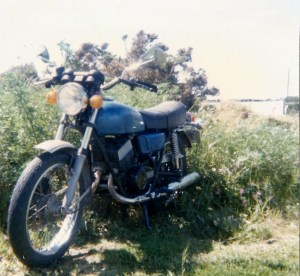
Under 5000rpm -no power, over 5000rpm -It’s off like a scolded cat.
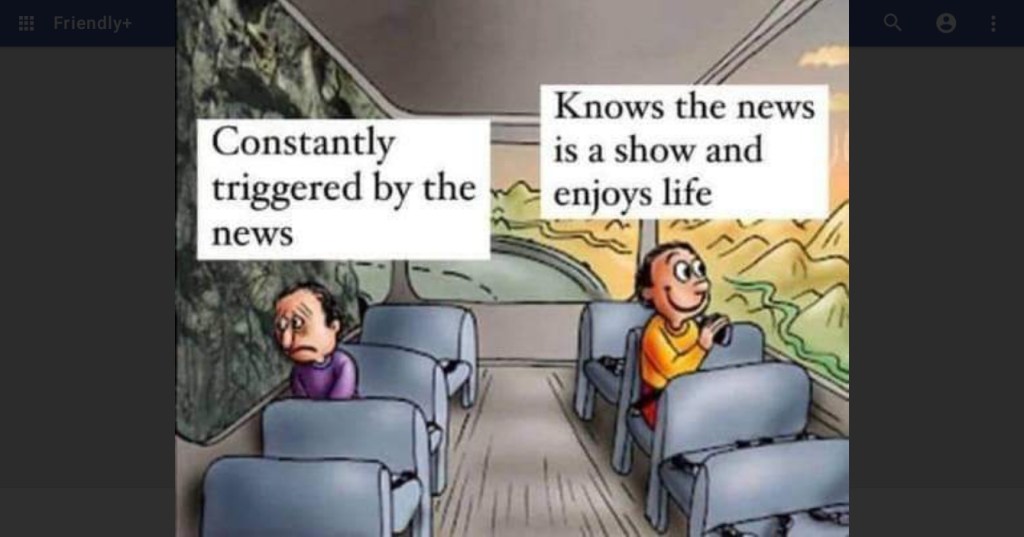
Then, there is these emergencies that are sent to your phone.
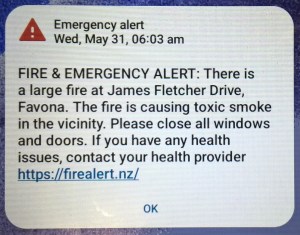
I deal with most of this by leaving the phone at home, and switching off the radio…
Life is blisser that way…
 Uncoffined
You must be logged in to post a comment.