In a world where so much seems broken, it’s important to take the time to remember to celebrate the positives in our lives.
When we take the time to notice the good stuff, we automatically build resilience – because a positive state of mind means that we are not so easily put into a state of fear and therefore not so easily controlled.
If we use tough times as motivation to make positive change in ourselves and the way we live our lives, we can move towards a better future.
Join us as we discuss the recent ‘wins’ and their impact.
The day came when our of our children has spread her wings and flown from the nest. She’s gone to University in a city far from us, and will be living there.
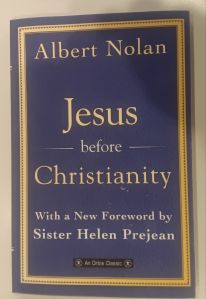
This book has a rather refreshing view on Jesus’s life rather than the religion built around him.
It struggles with that concept however, because it’s honestly hard to examine Jesus without any pre-assumptions. If you simply ignore the introduction and the revised ‘modern’ foreword chapters, the bulk of the book is well researched, and provides constant references to support the the authors assumptions.
In other words, it strives to get to the bottom of who Jesus really was without all the modern day hype.
It was originally written in 1976, and is still available new, which says something good.
The book reveals that Jesus actually existed, arguing that even if you ignore the bible completely, he is mentioned in Roman historical records at the time (he caused a riot at a market among other things)
Jewish society at the time was quite segregated, much like the Indian caste system or the English upper/lower class. Prestige was more valued than money in Jewish society, in much the same way that it is in Japanese society even today. (p70), and they were very much into virtue signalling.
As an example, Sinners were a well defined class of their own and included those who had sinful or unclean proffessions like tax collecters, thieves, gamblers, etc. Included were herdsman because they ‘could’ purposefully let their stock graze the neighbours property. Once you were classed as a sinner, you were there for life, although in theory a prostitute could redeem themselves via a rather tortuous procedure. (p30)
Another point to remember is that Jewish society was doomed at the time -the Romans were slowly taking over, and setting up a tax system in Judea. This rather ramped up the anxiety and tension at the time, as it would mean paying tax to the Romans rather than sacrifices to God.
Of note is the vally of Gehenna which is the origin of hell for both the Christians and the Jews. It was a most unholy place where centuries before, the most wicked of all deeds had been committed to appease pagan gods. In Jesus’s time, it was the site of a rubbish dump, where continously smoldering fires, where everything was decomposting and been eaten by worms (p114)
Most of the book is written like a biography and recalls Jesus’s life in those ancient times and what he was likely to be thinking.
In conclusion, I found it to be an informative book, that manages to give us an insight into the times that Jesus lived in, and the political and religious struggles that they endured.



 Uncoffined
You must be logged in to post a comment.