
Some offensive language, (especially if your a bit woke)
Hat tip to https://www.bassettbrashandhide.com/post/british-reporter-loses-it
Some offensive language, (especially if your a bit woke)
Hat tip to https://www.bassettbrashandhide.com/post/british-reporter-loses-it
Karl Marx once said, “Remove one freedom per generation, and soon you will have no freedoms and no one will have noticed.”
One day while the class was in the lab, a professor noticed one young man, kept rubbing his back and stretching as if his back hurt.
The professor asked the young man what was the matter. The student told him that he had a bullet lodged in his back. He had been shot while fighting communists in his native country, who were trying to overthrow his country’s government and install a new communist regime.
Then, the student looked at the professor and asked a strange question,
“Do you know how to catch wild pigs?”
The professor thought it was a joke and asked for the punchline. The young man said that it was no joke.
“You catch wild pigs by finding a suitable place in the woods and putting corn on the ground. The pigs find it and begin to come every day to eat the free food.
When they are used to coming every day, you put a fence down one side of the place where they are used to coming. At first, they are scared, but when they get used to the fence, they begin to eat the corn again and you put up another side of the fence.
They get used to that and start to eat again. You continue until you have all four sides of the fence up with a gate in the last side.
The pigs, which are used to the free corn, start to come through the gate to eat that free corn again. You then slam the gate on them and catch the whole herd.
Suddenly, the wild pigs have lost their freedom. They run around and around inside the fence, but they are caught. Soon they go back to eating the free corn. They are so used to it that they have forgotten how to forage in the woods for themselves, so they accept their captivity.”
The young man then told the professor,
“That is exactly what I see happening in many countries. The governments keep pushing us towards Communism/Socialism and keep spreading the free corn out in the form of programmes such as supplemental income, tax credit for unearned income, Free / subsidised Rations , Caste Benefits, dairy subsidies, payments not to plant crops, welfare entitlements, medicine, drugs, etc., while we continually lose our freedoms, just a little at a time.”
One should always remember two truths:
1. There is no such thing as a free lunch, and
2. You can never hire someone to provide a service for you, cheaper than you can do it yourself.
If you see that all of this wonderful government ‘help’ is a problem confronting the future of democracy, there is hope.
If you think the free ride is essential to your way of life, then God help you when the gate slams shut!
Most of the problems we face today are there because the people who work for a living are now outnumbered by those who vote for a living
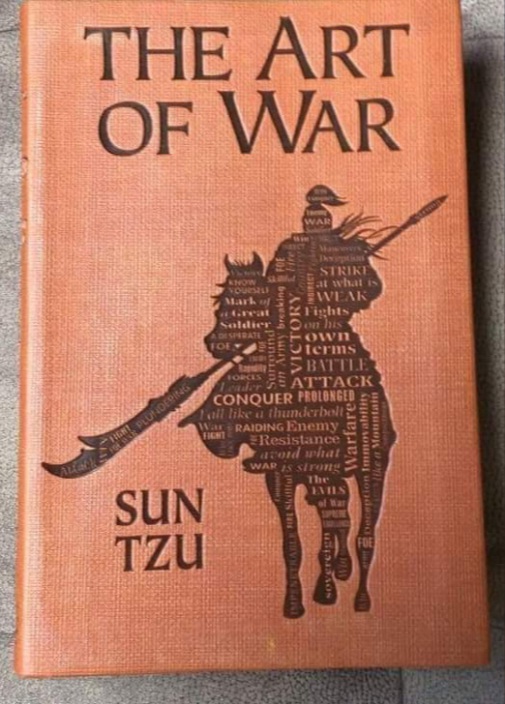
10 lessons from The Art of War by Sun Tzu:
1. Know your enemy and know yourself. This is the most important lesson in The Art of War. If you know your enemy and know yourself, you will not be imperiled in a hundred battles.
2. Appear weak when you are strong, and strong when you are weak. This is a lesson about deception. By appearing weak when you are strong, you can trick your enemy into underestimating you.
3. Attack where the enemy is unprepared. This is a lesson about surprise. By attacking where the enemy is unprepared, you can gain an advantage.
4. Make use of spies. Spies can provide you with valuable information about your enemy.
5. Use terrain to your advantage. The terrain can be a powerful tool in battle. By understanding the terrain, you can use it to your advantage.
6. Be flexible. The situation on the battlefield is constantly changing. You need to be flexible in order to adapt to these changes.
7. Concentrate your forces. Don’t spread your forces too thin. Instead, concentrate your forces on a single point of attack.
8. Strike at the enemy’s heart. The heart of the enemy is their will to fight. If you can break the enemy’s will to fight, you will win the battle.
9. Use deception. Deception is a powerful tool in war. By deceiving your enemy, you can gain an advantage.
10. Know when to retreat. Sometimes, the best course of action is to retreat. By retreating, you can preserve your forces for future battles.
These are just a few of the many lessons that can be learned from The Art of War.
This book is a classic for a reason. It is full of wisdom that can be applied to all aspects of life, not just war.


You must be logged in to post a comment.